September 20,2023
While reading the Washington Post this weekend, I saw an article titled, “Washington is full of rats. These dogs are happy to help with that.” Okay, I’m listening…tell me more. The article was a ride. The first two lines were some of the best journalistic prose I’ve ever read. Listen to this:
“The sound of a rat screaming in the jaws of a terrier is the same sound that a stuffed squeaky toy makes.
It seems so obvious. Of course the toys sound that way, because that sound awakens something deep in a docile dog’s neurons that says: Shake it. Shake it till it’s dead.“
Ugh, that’s so good. Anyway, the article is about a group of vigilante rat killers in Washington DC who call themselves The Ratscallions. The Ratscallions are a group of Rat Terrier dogs and their owners who take to the streets at night in Adams Morgan – a neighborhood in DC that I am only slightly familiar with because I had a first date there once. The story there was that I showed up for my date, and the man (who looked shockingly like Hugh Jackman) informed me that he also worked at Deloitte. I knew the relationship was dead-on-arrival because of this, but we got very drunk together on our own mini-bar-crawl of the local Adams Morgan establishments. It was a good time, but he did make a comment about how I “ordered the only drink that wasn’t on the happy hour menu.” After he made that jab, I went to the bar, started my own tab, ordered him another beer and myself a plate of loaded tater tots. When my tots came out a few minutes later, Wolverine reached for one, and I slid the plate away from him. I made that man watch me eat every tot on that plate. Honestly, 7/10, not a bad first date. Alas, I digress. The rats! Yes, these poor disgusting, diseased, vile rats are murdered in cold blood exterminated on the streets of DC by a bunch of good dogs bois and girls. The dog owners wear gloves (and long, non-baggy pants because “a rat did run up a gal’s pant leg once”, omfg) and place the little rat bodies in a trash bag for disposal at the end of the night. DC District officials made a point to state that they do not support or fund the efforts of the Ratscallions – because all of the rat abatement efforts they DO support and fund are clearly working so well.
You can read the rat article here.
That article had me so enticed, I read it out lout to my dad over the phone and dramatized the most exciting bits. Later that evening, I was trying to pick an audiobook to listen to while falling asleep. I already finished Jill Duggar’s book “Counting the Cost” where she tells the cheerful tale of her dad exploiting her and her siblings on tv for a decade while covering up the misdeeds of the sexual predator who shared her childhood home, Josh Duggar. When I couldn’t think of any new titles I wanted to buy with my Audible credits, I recalled my rat story and made the leap to my favorite book about plagues. The book is called “Get Well Soon” and it is a delightful (pre-covid) joyride through some of the most devastating plagues in human history: Bubonic Plague, Antonine Plague, Typhoid, Syphilis, Leprosy, Cholera and several others. She even has a fun chapter on Phlebotomy – which is not exactly a plague, but was a prime example of medical malpractice. The people who subjected their loved-ones (usually women) to the Phlebotomy treatment to cure mental illness, headaches or “female hysteria” were nearly as monstrous as the physician, Dr. Walter Freeman who profited from the practice.
One of the recurring themes of plague stories, is that throughout history, humans have created some pretty amusing theories on the causes and cures for disease. During the Bubonic Plague, also known as the Black Death, the most widely accepted theory of disease was the miasma theory – the idea that poisoned air or bad smells in the air make us sick. Now obviously, this isn’t that ridiculous because we now know that disease can spread through the air – this is why our moms smack us on the back of our heads when we don’t cover our coughs. But the idea that diseases can vary in the way they spread was unknown at the time. We now know that the Bubonic Plague was primarily spread by fleas carried on rats (hence my inspiration to pick up the topic after my rat article), and that sometimes the infection spread to the lungs, making the disease airborne as well. But the people in the 14th century dealing with the plague didn’t know that. All they knew was that bodies were piling up in the streets. Most of the written accounts from this period refer to the end of days – people who somehow survived the worst part of the plague, believed the world was literally ending. We are talking about a disease so deadly that mothers locked their infected children out of their homes to save the rest of their family.
No one knew how to cure the plague, but that didn’t stop people from trying a number of home remedies, all ineffective, but each of which were varying degrees of horrific. These “cures” typically fell in a few categories: 1) Animal cures: Think things like plucking the tail feathers off of a pigeon and placing it on a Bubo (a sore/swollen lymph node caused by the Bubonic Plague) and allowing the pigeon to absorb the “poison” until it dies. Rinse and repeat. They also did this with frogs, but the frogs allegedly exploded from the poison. 2) Bloodletting. You know this one. We saw how it worked out for George Washington. 3) Persecution of marginalized communities. Jewish people were blamed for the plague and many were subsequently murdered. 4) Freshening up. Cleaning the streets to remove the bad smells. 5) Eating weird things. Some cures called for ingestion of onions. Others called for fruits, vegetables and eggs. A healthy, balanced diet couldn’t hurt, but this cure is equivalent to preventing the flu with Emergen-C packets. 5) Quarantine and social distancing. This is the only one that could work, although, staying away from infected people doesn’t do much about those pesky rats. And they didn’t have the Ratscallions.
It’s easy to look back on the plague as I sit in my master bedroom with a bottle of Mountain Dew and Excedrin PM on my bedside table (which reminds me, I need to finish this up FAST because that shit is going to kick in soon). I know that if I wake up with a sore throat tomorrow, I can go to the doctor and get some of the very same antibiotics that would have been immensely helpful in battling the Bubonic Plague. I can take tests that will identify what kind of germies I have hanging out in my body, and get fast treatment for ailments that might have killed me a few centuries ago. And I’ll still whine about feeling sick and missing work. The treatments they used seem silly to us, but perhaps now that we’ve lived through our own deadly pandemic, we can understand a small degree of the desperation and fear that led them to try anything and everything. I, for one, can see myself being that person who goes “why don’t we catch that frog and see if it will help?”
Another plague-themed book that I love is called “The Ghost Map: The Story of London’s Most Terrifying Epidemic-and How it Changed Science, Cities, and the Modern World.” I know that title is a mouthful but it’s a wonderful story. I listened to the audiobook on my ten hour drive from Virginia to Kentucky for Christmas one year – because there’s nothing as holly jolly as a book about people shitting themselves to death. Sorry for that. The book is about Cholera, and unfortunately that’s the way people died from Cholera. They had diarrhea that was so severe that they eventually died of dehydration. Cholera is still around – thousands of people die from it each year. Luckily for us in our developed nations, it is highly unlikely that we catch it because our water is so clean, and even if we did catch it, we’d probably survive due to unlimited bottles of Powerade and doses of Imodium available at your neighborhood Walgreens (even available at the touch of a finger on Uber Eats).
The book is set in 1854 London, which was becoming one of the first “modern” cities in the world. That summer, the city experienced a deadly outbreak of Cholera. Despite the fact that this occurred several centuries after the Bubonic Plague, the miasma theory is more prominent than ever. Everyone believes that the Cholera is spreading through the air – by bad smells in particular. One of the more convincing arguments is that when you smell something rancid (think corpse smell, bodily fluids, garbage) it can cause you to become physically ill (you might gag, vomit or feel nauseated). So of course, bad smells make you sick. Like I said, we know this is silly today and that just because a bad smell can make you feel sick, it doesn’t mean that all sickness is caused by smell. The powers that be in London at the time took great care to scrub the streets and make sure they were smelling fresh. Yet more than 600 people in London died from Cholera that summer.
Dr. John Snow, (not to be confused with the brooding heartthrob from Game of Thrones, Jon Snow) was an obstetrician who had long believed that Cholera was caused by particles in water, particles from sewage contamination in particular. He kept trying to prove this theory to the medical community, but no one believed him. Snow was not the most popular man in town, which didn’t help his case. He was a teetotaler who was very into his diet – kind of like a fitness bro before fitness bros were a thing. I think he was very…opinionated, and not particularly shy about sharing those opinions with people. It’s annoying, right? But he was certain of his theory and wanted to help put a stop to the epidemic. When he learned of a bad outbreak of Cholera in the Soho neighborhood of London, he started making his map. He noticed that a lot of the deaths in the neighborhood were in the vicinity of the Broad Street Water pump. In fact, about 500 of the deaths in less than ten days occurred within 250 yards of the pump. Seems like a strong correlation, right? But Snow knew that to convince others that the pump was the nucleus for the outbreak, he’d have to explain every Cholera death’s connection to the pump.
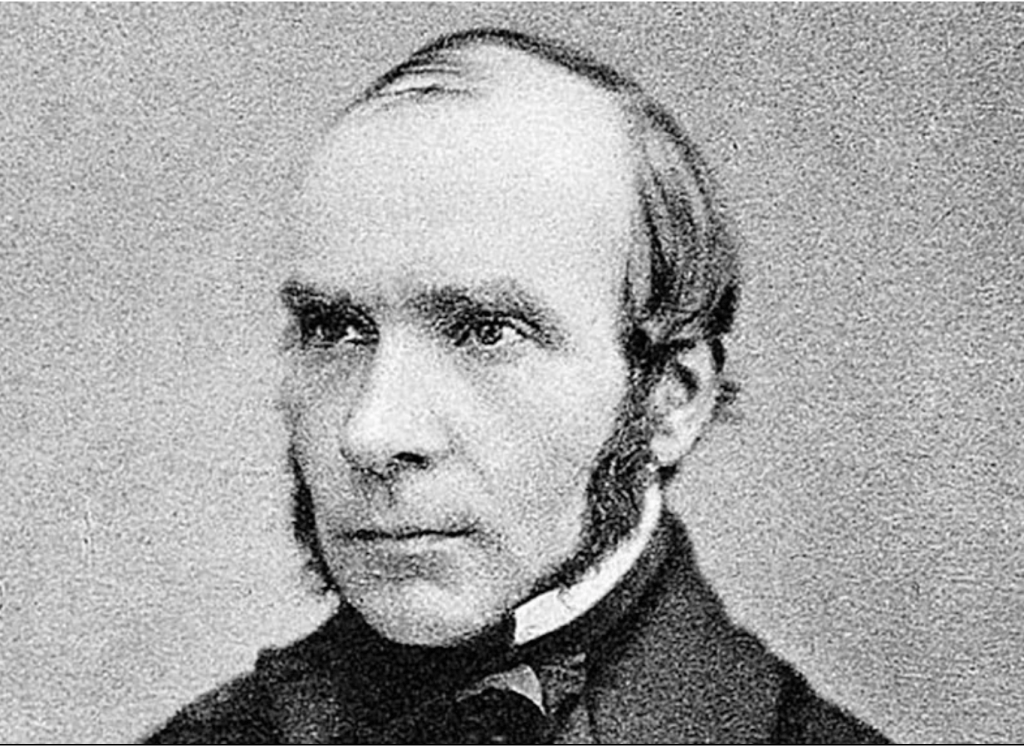
He worked tirelessly to track down information from hospitals and public records to figure out if the victims drank water from the Broad Street Pump. He made a map of all of the deaths and then investigated every single case to determine if there was a connection to the pump. Most of the deaths were easy to connect to the pump – people who lived nearby used the pump. Others deaths occurred because people who didn’t live near the pump ate at restaurants that used water from the pump. A coffee shop owner served water from the pump with meals, and 9 of her customers contracted Cholera. Some people contracted Cholera after purchasing “sherbet” from street vendors, who made the fizzy drink with water from the Broad Street Pump. One woman who didn’t live near the Soho neighborhood at all died after drinking water that her family sent to her because she loved the taste of the Broad Street water so much. While he was making his map, he not only found that every Cholera fatality had water consumption from the Broad Street pump in common, he also discovered the first Cholera case in the neighborhood. A mother dropped the dirty diaper of her Cholera infected baby (who later died) into a well near the pump, and contaminated the water supply, resulting in the outbreak. When Snow had finished gathering his evidence, he presented his findings to the city, and the handle to the Broad Street pump was removed – saving countless lives.
People in science often talk about the symbolic “Handle of the Broad Street Pump” when they want to find the underlying cause of something or the simple fix that will change everything. Snow’s map was really meaningful because it was a demonstration to the medical community that the public health is sometimes influenced most by considering all patients/cases as part of their larger environment, rather than individual people needing care. Basically, he was looking at the big picture. He didn’t wait for individual sick people to come to his office for treatment, he instead went out to seek the big, systemic changes that could impact many people at once. We saw these ideas come to life during the Covid outbreak as we all dealt with stay at home orders and mask mandates – these may not have been as immediately effective as removing the handle of the Broad Street pump, but I believe they were inspired by the same goal. John Snow was such a baller-shot-caller and an eligible bachelor. Prove me wrong.
So why did I write so many words about disease and plagues and rats tonight? I know what you’re all thinking. Rebecca, you’re not that kind of doctor. You’re not the helpful kind, remember? Yeah, yeah I know. I guess I often think about my life in terms of the Soho epidemic. Hear me out. I haven’t been doing…well…lately. I came home from work last night around 6, and took some Zzquil and slept for about 14 hours before I got up to begin another work day. To be honest, I was planning to do the same tonight after work but I thought I’d spend three hours writing about this bullshit instead. Things for me personally are no worse than usual. A man I like doesn’t like me back. Friendships are hard to navigate and I’ve been out of practice thanks to a move to Virginia from my home in Kentucky and a pandemic. I don’t get many dates these days, and I can’t tell if it’s because I’m getting less attractive as I get older or if it’s because I don’t have as much energy to try. Usually my job is that one shiny beacon of light in my life. I’ve always been so good at it and so energized and empowered by my work. But these days, it doesn’t feel like that. I feel like I’m working hard but not on the right things. I feel like I’m trying my best to impress but still letting people down. I wake up and don’t feel excited to go to work like I used to, but I also don’t feel excited to go home. Because when I get home, no one is there and I just have to face a different part of life where nothing is enough there either. It’s been a tough season. And I think I keep telling myself that I just need to find the handle for the Broad Street pump. If I can find the one thing that makes me happy, everything else will fall in line – or at least nothing else will matter as much. If I find a boyfriend, then everything will be different. Or if I get some validation from my boss, then everything will feel better. Or maybe I need to adjust my medication, then everything will feel okay. Or maybe a different therapist will do the trick. Maybe if I go on a rat hunt in Adams Morgan, I will finally be happy.
But the truth is that none of those things are going to fix everything. Hell they may even make things worse. Nothing like a rat running up your pant leg to make you need to adjust your medication some more. Sometimes life is like one big experiment, where you form a hypothesis, try something out, and then see what the results are. You stick a frog on a Bubo, watch it explode and then grab a pigeon. Rinse and repeat. There likely is no handle for the Broad Street pump here. But maybe that doesn’t mean I shouldn’t take a note from Dr. Snow. Maybe the trick is to try to look at the big picture while tracking down individual problems one at a time. Maybe it’s getting to the bottom of one thing at a time (just like Snow considered one patient at a time) and but make some sort of map to see how all of the individual causes/fixes fit together. Small picture action, big picture thinking?
I’m not sure. Mostly, I just wanted an excuse to tell you about the rats. Please read the story about the rats.
 Cluelessness is the Mother of Invention