September 24, 2022
Earlier this week, I served as a reviewer for a proposal that some people in my analytics group are writing. A proposal is basically a document you write to a company or agency that is trying contract out some work. It’s a sales document where you have to be persuasive and tell the sponsor of the work what your approach to doing the work will be and why it’s the best approach and the most bang for their buck. As a reviewer, I had the nice cushy job of reading what other people wrote, making comments in the margins, and then jumping on a call with the writers to explain my feedback. And I will do this for every draft of the proposal that the team brings forward.
We had one of these calls on Thursday, and some of the other reviewers were really quiet on the line, so I was like “Well, I have thoughts.” I gave the team feedback on the fact that they were telling me what they were going to do in their approach without much of the how. “We’ll make sure the sponsor’s needs are taken into account before we begin working on any problem.” Great! But how will you do that? Will it be a series of meetings? How will you facilitate said meetings? Will there be some sort of report, roadmap or other deliverable? Why is this better than what the competition will do? I went on and on about how we were using up space in the document to talk about the sponsor’s problems they need us to solve without hammering home the pain they feel as a result of those problems and the benefit they will experience when we solve them (that is, why should they spend their money on this?) Thirty minutes of this was quite a treat for the team, I’m sure. I’ve been on the other end of these calls as a writer, feeling like I’m getting my ass handed to me by the reviewers, and it’s anything but a warm and fuzzy experience. But it’s also criticial feedback that you need if you want to write a successful proposal. So you gather it all up, don’t take it personally, and get started on the next draft. Side note: persuasive writing is really hard, especially for analytic thinkers, and it’s much easier to critique it than it is to do it. So no shade to the team, they are awesome.
After the call, I felt pretty down about having to deliver that kind of feedback. Any feedback that isn’t air horn noises and “Wow, great job” can be hard to deliver. Not just because it’s not fun to tell someone that they aren’t quite there yet, but also because negative feedback can require a lot more thought and tact when it comes to delivery than “Wow, Eric, you crushed it!” Although I think I was really careful not to deflate the writers, I still questioned myself and wonder if I came across as a “know-it-all-dick”. But like I said in a previous post, onto the next intimidating item of the day! Later in the day, I got an email from one of the other reviewers who was quiet on the call and the subject was “Feedback on my feedback?” He wanted to set up time to get some tips from me about how to offer actionable feedback when reviewing proposals. That’s how important this feedback loop is – I have someone asking for feedback on how they give their feedback! What a great job this person is doing taking responsibility for his own growth as a coach and leader! It was awesome to see and I imagine I’ll get some feedback from him about my own feedback and delivery when we talk next week and it will be good for both of us.
I just got back from a leadership training in California that was focused almost exclusively on giving and receiving feedback. They taught me a pretty simple technique for giving feedback called SBI – Situation, Behavior, Impact. It goes like this:
Situation: Give the important details and be as specific as possible – where and when did the incident happen? “While we were walking down the hallway on the 4th floor on our way to the 10 am meeting on Wednesday…”
Behavior: Explain the behavior you observed and be specific here too. “You used a straw to shoot a spit wad at Terry, the Partner on the project. The spit wad hit him in the back of the neck. You giggled.”
Impact: Explain the impact that the behavior had on the way you or others feel. “I think Terry was very upset about this and got spit all over his very expensive suit. He may be less willing to work with us in the future because of it and now we have to pay for his dry cleaning. You owe me 20 dollars.”
Then you pause to allow the other person to elaborate on their intent behind the behavior, and then you can start making plans for how to address it in the future. That pause is the important part that a lot of people forget – it’s the person’s opportunity to explain why the behavior occurred so you can see if there are larger problems at hand that you need to consider. It’s like when a little kid is acting up in school, one of the first things a teacher might want to know is “is there something going on at home?”, for example. This all sounds easy peasy when someone puts SBI on a poster board and you practice it in a classroom, but in real life, it’s not that easy. One of the first pieces of advice I’m going to give my reviewer buddy at work next week is going to be “put it in writing first” because that’s a great way to prepare yourself for the conversation. That’s how I prepped for Thursday’s call – I wrote it all down in a Word document using the exact phrasing I planned to use out loud with the team and then basically read my document to them on the call. My script even included my pauses for intent.
I wrote a post on here the other day about some men in the DC area who had let me down. One of those men actually read the post and recognized himself in some of the things I said, and sent me a long apology. I was really impressed by this because that’s a really brave and vulnerable thing to do, but also because he was introspective enough to see his own behavior in what I wrote. I didn’t mention any identifying details about this person in my post (other than he’s a man in DC who is not into me…boy oh boy the overlap in that Venn diagram is huge), but he still targeted his own behavior in my vague description.
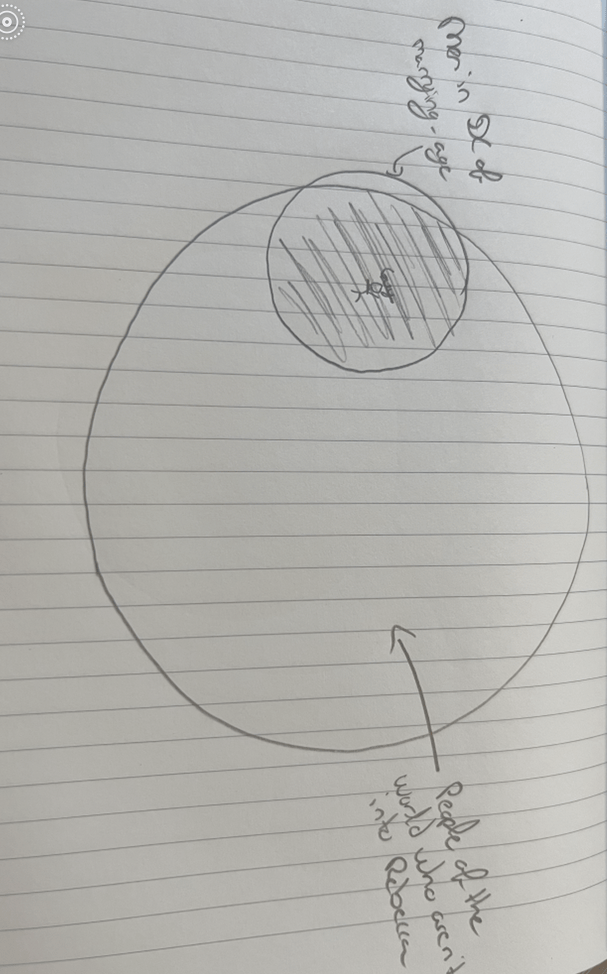
That’s really impressive to me, and he took my indirect feedback and directed it to himself. In his note to me he mentioned that he let himself down by not being a man of his word and that no one deserves that. He recognized his own behavior and the impact that it has, then made a plan to change course in the future. Then he told me in not so many words “You and me? Never gonna happen.”
I don’t bring all of this up to poke him in the eye – on the contrary, I think it was a really classy, grown-man thing to do on his part. I brought it up to point out my own deficiency in giving feedback. I know for a fact that I had attempted to deliver the same feedback that he got from my blog post to him in person/over video chat well before I wrote any of it down. I tried to express to him how I felt like I was the lowest priority on his list, and that no other plans in the world could be cancelled by him unless they were plans with me. I tried to make him see the impact of that, and when nothing changed, I assumed that meant he didn’t care. But I think he did care, or he would have if he really understood me – he showed that to me with his thoughtful apology. If I know me, I would wager that my delivery of that feedback was inadequate. I can’t recall the exact details of the way I delivered it originally, but if I know me, I probably laughed after I said it as if it were a joke or not as serious to me as it actually was. I probably didn’t make eye contact, I probably rushed through it to get it over with. I probably changed the subject quickly afterward to avoid the actual confrontation. How is anyone supposed to understand the impact of their behavior if I can’t look them in the eye and articulate to them what that impact is and then pause and give them time to tell me about their intent?
If you’ve never read Pride and Prejudice by Jane Austen, I would recommend that you immediately stop reading this crap and head to your local bookstore or library to pick up a copy. Definitely stop reading here if you want to avoid spoilers. In that book, Mr. Darcy (the handsome male lead who makes 10,000 pounds A YEAR!) approaches the heroine of the book, Elizabeth Bennet to profess his love for her. The two of them have endured an interesting acquaintanceship thus far in the novel (I’m using interesting in true mid-west form to mean bad). One time at this rager party her neighbors were throwing, she overheard Mr. Darcy telling his buddy that she was “not handsome enough to tempt” him and making fun of her family. He told her that only a handful of women in the world are truly accomplished, which was true based on his personal definition of that word (accomplished = really rich). She also learns about some drama between him and a charming, dumb-jock soldier named Mr. Wickam who she happens to have a crush on (allegedly, Darcy ruined his life for funzies), and has decided that he’s a prideful, unkind person. Who could blame her? This behavior is all very bad indeed.
Anyway, he walks up to her and says “In vain I have struggled. It will not do. My feelings will not be repressed. You must allow me to tell you how ardently I admire and love you.” DAWWW, pretty good start, Darcy! That last sentence in particular…really nice. But of course, Elizabeth only hears that first part of his declaration where he was basically like “Listen, I really don’t want to love you, but it’s my cross to carry – you know, because your family is embarrassing and you’re not that pretty or accomplished.” She takes offense to that (women, am I right?) and says something like “Wow, since it’s such a burden for you to like me, you’ll probably get over this flat out rejection I’m about to throw at you very quickly. And by the way, if you weren’t so odious, I would thank you for this compliment, but nope I won’t even do that.” So he is obviously a little taken aback by this, and asks her why she hates him so much. She then goes on to offer him some very pointed feedback on his behavior since they met. Here’s what she says:
- Behavior: Your best friend was in love with my sister and you told him to ghost her! Impact: That hurts me because I love my sister and it causes me pain to see her in pain.
- Behavior: Mr. Wickam told me that you reduced him to his current state of poverty by denying him the money that your own father promised to leave him on his death bed. Impact: I wanted to marry Mr. Wickam because he’s a cutie patootie with a booty, but I can’t because we’ll be too poor to survive. And it’s all your fault!
Quick pause here. She’s delivering this feedback to him and he starts to get defensive and angry, and as a result, adds a third complaint to her list for her: Behavior: I never hid the fact that your inferiority of connections bothers me (that is, I don’t like that you’re poor and that your mother and sisters are dumb and embarrassing in public). Impact: I hurt your pride and now you’re yelling at me about your sister and Mr. Wickam. You’re making excuses for why you don’t want to marry me, when in reality, it’s because of your own pride. She challenges him on this and insists that his general attitude toward her family didn’t sway her decision about the marriage proposal, but rather made her worry less about hurting his feelings in her delivery of the “HARD PASS”. Ouch.
Okay, so that whole exchange didn’t go the way Mr. Darcy had planned and he ran home. Elizabeth did a pretty good job of delivering her feedback to him – she was specific, articulate, and expressive. He definitely understood the impact his actions had (the final impact being an embarrassing and angry rejection), but one thing she didn’t do was pause to allow time for him to talk about his intent. Tempers flared on both sides, and he didn’t get a chance to explain himself. She would ask him if he denied doing the things she was accusing him of, and when he didn’t, she’d be like “See! You’re an asshole. Oh and another thing…” She just burned through one bad behavior after another without stopping to hear his side of the story. Instead of a discussion, they had an argument.
He must have taken some time to digest all of Elizabeth’s feedback, and sat down to write a really nice letter describing his intent behind all of the grievances Elizabeth expressed. It wasn’t intended to be a persuasive letter, he opens by saying “Look, I know the answer is no and there’s no changing your mind, but here’s my side of the story.”
- Intent: I told my friend not to marry your sister because I love him the way you love your own sister. I was trying to look out for him the way you would look out her, and I believed that marrying into your family is a mistake. It’s a mistake because your family is poor and also because they don’t seem to understand propriety. I still believe it’s a mistake to marry Bennet girls, but was willing to make that mistake myself because I love you, girl. Honestly, I also believed that your sister was not as into my friend as he was into her – she wasn’t showing him much affection and I feared that her intentions were to marry him for his money (You know, because you’re all poor. Did I mention that you’re all very poor? I make 10000 pounds a year and my sister is very accomplished.)
- Intent: Mr. Wickam is an old family friend and my father did like him a lot. As a result, I gave him a bunch of money to study law or something and washed my hands of him because he would never spend my father’s money the way we asked him to (we wanted him to be in the clergy). But then he started hanging around my sister and made a plan with her to sneak away and get married without running it by me. I discovered their plan in time and ran him off before they eloped, and he ghosted my sister. He was definitely after her for her money (30,000 pounds, did I mention that I’m very rich?) and to get revenge on me for not supporting him his whole life. I love my sister the way you love your sister, Elizabeth and I don’t care how poor Mr. Wickam is now. He sucks.
He closes his note with “You may wonder why all this was not told to you last night; but I was not then master enough of myself to know what could or ought to be revealed.” That’s the thing. It is so hard to be master of yourself when you’re having important conversations. When emotions are involved, or you’re staring down at the barrel of truth that you’ve hurt someone you love, or they’ve hurt you – it’s so hard to have the right words to say. And if you’re Elizabeth, and you’re really good at expressing yourself, you might be so focused on pouring out your own observations and feelings that you forget that you might only have part of the story or may simply misunderstand the other person’s intent. Elizabeth assumed Darcy was just a hateful person who didn’t care about anyone but himself, but most of his behavior was driven by love that he had for his friend and his sister.
I identify so much with Mr. Darcy because I’m really rich because I am a much better at expressing myself in writing than I am with my mouth-words. I think some of the times in life I’ve been most effective at getting someone to “hear” me have been through writing letters. I’m an excellent pen-pal (although if you ask my friend Taylor, he’ll tell you about the time he was deployed overseas and I wrote him a four-page joke about a moth that I stole from Norm MacDonald on The Tonight Show). I’ve had people reach out to me years after the fact saying things like “I re-read your letter, and you were right about this…” I can organize my thoughts and use the right words to make you really hear me. And one perk of this medium is that if you don’t hear me the first time, you can re-read it until you do hear me. It also gives people the opportunity to step away from the conversation…if what I’ve written is overwhelming you or making you feel things, you can put it away and try again later. This is really useful for when it’s critical for people to understand me, whether I’m telling the proposal team that they aren’t making me feel the pain their potential client is feeling, or I’m having to tell my friend about the pain I’m feeling as a result of their behavior, or I’m having to explain the intent behind my own crappy behavior.
It’s okay to try to stick to your strengths when you can, especially when you’re doing something really hard like giving someone feedback. Mr. Darcy might not have been understood in the moment when Elizabeth was in his face running him down his resume of transgressions, but he went back to the drawing board, used his strengths in writing that clear, thoughtful letter and in the end she really heard him. Not to spoil the book even further, but he does eventually get the girl in the end (although I am a Mr. Darcy-stan and am convinced it was she who got him in the end). The other moral of this story is that I’m an excellent (albeit obnoxious) pen pal, so let me know if you need one.
 Cluelessness is the Mother of Invention