
At Least She Had a Husband to Kill
October 9, 2021
Emily: Reading in front of other people is extremely rude, Lorelai.
Lorelai: Shauna Christy shot her husband.
E: What?
L: Shauna Christy, you remember Shauna Christy.
E: Yes, I remember Shauna Christy, she was a lovely girl.
L: Well, apparently this lovely girl came home to find her husband giving the nanny a nice little bonus package. And they say good help is hard to find.
E: That’s just gossip.
L: Gossip? The man was shot thirty-five times. He looks like a sprinkler system.
E: I can’t believe this. Shauna was always such a nice girl. She was bright, cultured, well-spoken.
L: And apparently a big Annie Oakley fan.
E: This is not funny, the woman committed a crime.
L: Okay, fine.
E: This is a tragedy.
L: My bad, sorry.
E: A man is dead, a young woman ruined.
L: Consider the subject dropped.
E: At least she had a husband to kill.
That closing remark from Emily Gilmore is one of my absolute favorite lines from any television show. The combination of dark humor mixed with the universal presence of motherly disappointment and guilt is *chef’s kiss*. This exchange comes from my favorite television show, the Gilmore Girls. If you aren’t familiar with this show, it was a long-run drama that aired on WB in the early 2000’s. It chronicles the lives of 32 -year old, Lorelai Gilmore and her 16-year-old daughter, Rory who live in a quaint, fictional, little town in Connecticut called Stars Hollow. Stars Hollow is full of larger than life characters – Kirk, a young man who had about 500 different jobs throughout the show’s 7-season run; Miss Patty, a dance teacher who has a higher body count than all of the Kardashians combined; Babbette, whose natural speaking voice is louder than JFK airport; Luke, a grumpy guy who runs a diner in a flannel shirt and backwards baseball cap and loses his shit when people use cell phones in his place of business; Taylor, the town’s singular politician who calls all the shots and is mad with small town power; Suki and Jackson, the chef and vegetable farmer power couple; and many others. Lorelai and Rory live vibrant, colorful lives in this town of misfits and often find themselves in the middle of the quirky scandals and traditions Stars Hollow thrives on. It seems like they are attending a different town festival or activity every other episode – Founder’s Day, the Firelight festival, the knit-a-thon, the festival of living art, Spring Fling, a picnic basket auction, the end-of-summer-madness festival, the 24-hour dance marathon, just to name a few.
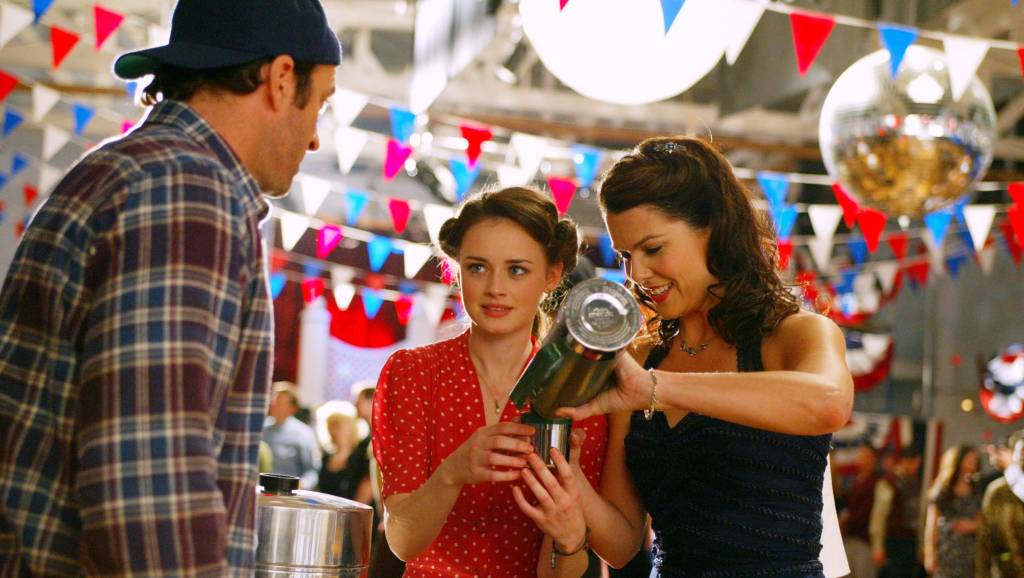
Outside of the whimsical town-life the girls lead, they also deal with some interesting family dynamics just 30 miles away in the real-life Connecticut city of Hartford, where Lorelai’s parents Richard and Emily Gilmore live in their enormous, stuffy house. Lorelai’s relationship with her parents, described in her own words as “as close as the one-armed surfer girl and the shark”, was complicated by a less than touchy-feely childhood, followed by a teen-pregnancy which resulted in Lorelai’s departure from the grand Hartford house to live a different sort of life in Middle-class Utopia – Stars Hollow. In the pilot episode of the show, a monetary deal (a loan for Rory’s private school education) lands Lorelai in debt to her parents, where the “interest” on the loan is a weekly dinner with Richard and Emily every Friday night. Hilarity and heartbreak ensue as the duo move through life dealing with these tricky family dynamics, class clashes with the kids at Rory’s fancy private school (and their parents), town drama and of course, BOYS, BOYS, BOYS.
Here is a list of the things I love about the Gilmore Girls:
- The women. Although there are dozens of lovable characters in this show, the meat of the content is about the women – the three generations of Gilmore women in particular. The audience gets a window into the lives of three women who have more in common than they dare to admit, who are all in vastly different stages of life. Rory navigates the beginning stages of finding herself, learning to build adult relationships for the first time, and the ups and downs of first (and second, and third) love. Lorelai is living the single mom life, trying to balance her current career, her career aspirations (she wants to own and operate her own Inn some day), the rocky relationship she has with her parents, as well as figuring out how to have successful romantic relationships on top of that. Emily has been married for many years, and has a husband who is struggling with his own self-worth in a company that is pushing him toward retirement, which causes her to question her own utility in society. She worries for her daughter and grand-daughter and is desperate to build relationships with both of them, yet is plagued by hurt from Lorelai’s actions in the past. I think she is perhaps the most complex character in the show. I love all three of these women. One of my favorite things about the show is it’s relevance to every walk of my life thus far. When the show aired in the early aughts, I identified with Rory. I was a lot like her actually, and even was told with some frequency that I favored the actress who plays her, Alexis Bledel. Of course, now I’m one year younger than Lorelai was when the show first aired (and I *wish* I favored the actress who portrays her, Lauren Graham), so my allegiances have changed. I hope I still watch the show when I’m Emily’s age.
- The grand romantic gestures. Lord above. The men in this show are so quick to fall in love with Rory and Lorelai, and go above and beyond to show their affection. A teen named Dean (haha, cute rhyme) built a car for Rory. BUILT a whole damn car. A college boyfriend named Logan showered Rory with expensive gifts and threw extravagant parties for her – he even threw her a huge party to celebrate her newly-obtained criminal record. He sent her a toy rocket in the mail once, which Rory spent days trying to de-mystify, only to realize it symbolized an episode of the Twilight Zone that Logan felt was the perfect representation of true love. Lorelai’s suitors were even more extra than that. Fiancé #1, Max, sent her 1000 yellow daisies the day he proposed. Rory’s dad, Christopher once picked Lorelai up for a date in a red convertible and took her to a barn for a private, outdoor showing of the movie Funny Face. He also took her to Paris, bribed a restaurant to open in the middle of the night and proposed to her in front of the Eiffel Tower. And Luke (aforementioned flannel man) – the right man in the end, wasn’t the type for grand gestures, but showed her his love with a hundred small, thoughtful gestures. His grand finale in the final episode of the series, where he stayed up all night sewing together tarps to make a giant tent for Rory’s going-away party (she about to set off as a member of the press on the campaign trail with Barack Obama) was perhaps more romantic than any other grand exhibition of love that we saw in the show.
- The meddling. Emily Gilmore gets into a lot of trouble for meddling in Lorelai and Rory’s lives. She effectively plans and executes a break up between Lorelai and Luke in the early stages of their relationship. She invites Rory to a party ripe with eligible, young bachelors when she knows Rory is in a relationship with someone already. She has a knack for showing up at Rory’s school unannounced, interfering with Lorelai’s romantic conquests, and then gets very, very offended when the girls don’t tell her things. She is the stereotypical meddling mother. It’s fantastic.
- The class commentary. When Luke comes over to meet Richard and Emily for the first time, Lorelai tells him not to ask for a beer at dinner because Emily thinks it’s “nitwit juice”. When Emily comments that Luke’s diner is “rustic”, Lorelai whispers in Luke’s ear that she really means “dirty”. By the end of the evening, Luke is so drunk from all the nitwit juice and walks to his “rustic” truck in complete awe of how Emily managed to insult him all night long without ever saying anything impolite. This scene is a perfect representation of the classism Emily and Richard bring to the table – they spend a great deal of time and energy trying to avoid Lorelai and Rory dating or marrying men that are “below their station”. The irony is that Lorelai is no more well-off financially than Luke, yet because of her “breeding” her parents have expectations of a wealthy and connected match.
- The pop-culture references and fast talking. I think this show contributed a great deal to my popular culture education. When the show first aired, I found myself googling references that the girls made to Jimmy Carter, the Edies of Grey Gardens, Final Destination, the Godfather, Pippy Longstocking, Bill Maher (the show was called “Politically Incorrect”, dammit, he was supposed to say those things!) and many more.
When I was in graduate school, I used to sneak into the classrooms owned by the statistics department on nights and weekends, and use the space for studying. I would log into my Netflix account and play episodes of the Gilmore Girls on the giant projector screens. It was nothing more than background noise, but to this day, that show is like a security blanket for me. If something gets me down or worried, I turn the show on and it’s like being with an old friend. The show is not a sitcom – problems the girls face in the show sometimes carry on and on for entire seasons. Almost every episode of Season 6 was plagued with a fight/separation between Lorelai and Rory. The girls go through sad things – break ups, death, disappointment, and worry. They also DO bad things. These ladies screw up a lot. When Lorelai and Luke broke up and she slept with Christopher on the same night, I almost didn’t come back to the show at all. I was so disappointed and disgusted. Rory lied to a friend over the course of a few episodes and had to deal with the fallout of getting caught in her lie. She stole a boat with her boyfriend, and ended up having to do community service. They accidentally hurt their friends, they make bone-headed decisions in relationships, and live really messy lives.
All of these very real, painful, messy plot lines are buffered by simultaneous plots that are very silly and unbelievable (the episode where a pickle train crashed outside of Stars Hollow and the whole town was unbearably stinky for several days comes to mind), making most of the show very light and airy even in the face of adversity. I think the main reason I like the show is that Rory and Lorelai have something in common. No matter what happens, they never doubt themselves. They never question how beautiful they are, or what they bring to the table, or show any sign of the insecurities that many viewers (especially those of us swimming in this god-forsaken ocean of estrogen) carry around. Rory never looks in the mirror and comments on her thighs. Lorelai never laments the wrinkles on her forehead or the lines around her eyes. They never call themselves names or take the blame for things that are not their fault. They just walk through their silly, messy lives making all these mistakes and good decisions, and they do it knowing exactly who they are, with perfect confidence. That’s the real beauty and magic of the show. It’s magic because no one is like that – no one is confident all the time. No one eats as much as Lorelai and Rory do and stays as thin as they are. No one lives in a town with 100 people and still manages to find hunky, eligible men around every corner. No one talks that fast or uses that many pop culture references in conversation. No one drinks that much coffee (I know, you’re all disagreeing with this one). It’s magic, but maybe it’s magic we can learn some things from.
Also – don’t ask me about the 2016 reboot. I don’t want to talk about it.
Scenes from a Neighborhood
October 7, 2021
I recently moved into a townhome in a suburb outside of Washington DC. The town I now call home, Aldie, is vastly different from my former neighborhood called Pentagon City. In place of the high rises and hotels Pentagon City is known for, there are single family homes and townhomes as far as the eye can see in Aldie. Aldie has a General Store and a pie shop. Pentagon City has a Gentleman’s Club and a lot of bars. My life in a high rise apartment in Pentagon City was full of breathtaking views of spectacular landscapes including the Potomac River, epic monuments and big buildings full of important people. Now my views are quite different, but spectacular nonetheless. I can look out my window and see…well, more windows. Windows belonging to the homes of my neighbors. I can look across the street and see people living their lives in the tiny fishbowls that magically appear when the sun goes down and the lights in your house make you completely visible from the outside. I can look up from my binge of “The Crown” on Netflix and glance across the street to see couples curled up on the couch in front of their own tv’s, and wonder what they are watching and how it makes them feel. I can see dads playing in the living room floor with their children while their wives/girlfriends move about the kitchen. When the sun is still up, children play with their neighborhood peers in the streets, and keep the basketball court behind my house completely occupied at all times. I hope this doesn’t sound creepy. I am not watching my neighbors, but I am noticing them.
It’s strange. When I lived in my high rise for the last 4 years, I was sharing a single street address with thousands of people. I knew this to be true because…well because I can do math, and I could see my neighbors in the hallways, in the elevators, at the gym, in the lobby, and at the pool. I met some of them and built a nice little community of friends. But for the most part, something about apartment life allows you to lock yourself away in your small corner of the building and forget that every single family in every single unit of the building is living a life you know nothing about. They are watching Netflix, playing with their children, cooking dinner, having fights and difficult discussions, scolding their pets, studying for exams, reading books – all living their own renditions of this thing called life right next to you. Some of them only one wall or floor away from you. Close enough to touch, but so far away that you don’t even know their names.

Now that Maudie and I have moved into this dream home – this beautiful little townhome with four floors and more space than she and I need and wonderfully gaudy paint schemes picked out by yours truly – I feel more connected to the outside world. Don’t get me wrong. I haven’t made a ton of friends with people in my neighborhood yet. I wish I were that person who can make fast friends and charm people on sight, but that part is going to take time. But I still feel connected more because I notice more. I can see the personalities of each home from the outside. I know one of the families across the street loves Halloween and they have creepy, cute cat eyes in their window that light up at night. I know that a little girl who can’t be more than 2 lives in the house across the street and she likes to play on the balcony when the weather is nice. I know that the little boy named Elijah who lives next door likes to play football and his sister is one of the cheerleaders for his team. I know that the lady down the street on the left is FIESTY – she got up in some teenagers’ faces one night when they were revving the engines of their muscle cars in the street and woke up her sleeping baby. She called the cops and those boys haven’t returned since. The man down the street to the right says good morning to Maudie every day while he’s putting his bicycle back into his garage – his garage is full of bicycles for humans of all sizes.
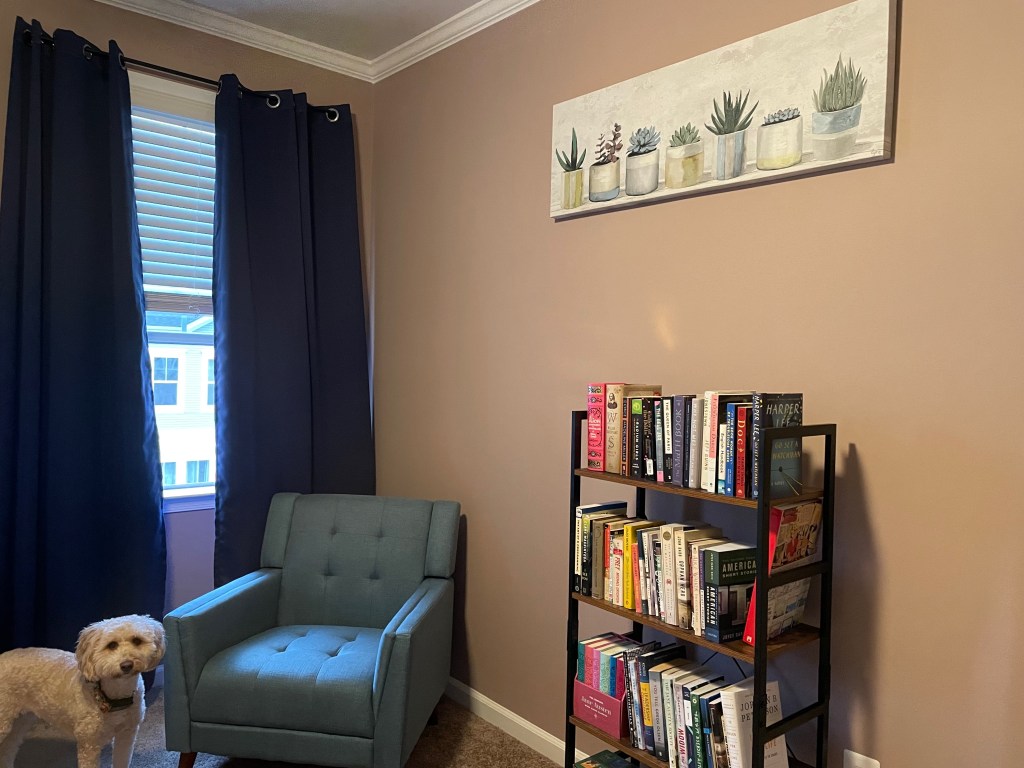
I was teaching a data science course last week, and I heard shouting through my living room wall coming from the townhome next door. The couple who live in the townhouse next to mine were in the middle of a very heated argument, both speaking another language at max volume. The argument was so loud, I know for sure that the participants on my Zoom presentation heard it through my microphone. I made a joke about the ‘universal sound of family’ and got a good laugh as I moved my laptop up the stairs to a quiet room. In all honesty, it was an awful sounding fight. I’ve never experienced a screaming match like that in my own life, and once the adrenaline of teaching my class wore off, I thought about the pain that both parties must have been feeling in that moment, for the rest of that day, for the rest of the week perhaps. Yet when I came outside early the next morning, my neighbor (the husband) gave me the biggest grin followed by a “Good morning, neighbor!”, and he was in the process of moving my trashcan out to the curb for me. This is nothing spectacular. Every day we are alive, we interact with people who are going through difficult things, and sometimes they don’t let us see it at all – in fact, they still manage to shower kindness upon us. The woman who made your pumpkin spice latte this morning is going through difficult things, your boss is, your neighbor is, your best friend is…and you may never know what it is, or how bad it is, or how they are choosing to cope with it.
I think living in an apartment, especially a small one in a big city, facilitates cave-dwelling. It’s too easy to lock yourself in to your own tiny space and look out your own window and see nothing but tall buildings and sky – no people, no faces, no other lives being lived. It’s an impersonal way to live, and you can spend all of your days completely immersed in your own bullshit. Every setback or tribulation feels lonely, like your own personal atomic bomb that pollutes your apartment with the fallout of extreme sadness and dirty tissues, while your neighbors are seemingly happy outside of the blast radius. And if they weren’t happy, you would never know it because you never see them. Or maybe you see them but you never truly notice them.
The fight that I accidentally eavesdropped really got me thinking about my new surroundings and how good they have been for me. I’m not celebrating what was obviously a painful, tense time for the nice people who live next door, but I am celebrating the fact that I’m in a position to notice people more. My new view allows me to really see people living – some of the good parts and the bad parts of doing so. Just like you, dear reader, I have bad days and heartbreak. I still live alone and find ways to cope by myself – usually a shower, some snuggles from a Maudie dog and some Gilmore Girls on tv can help immensely. Here, I’ve found that I can also open my windows and allow the crisp fall air to enter my space, along with the delightful sounds of other people living – children shrieking during a game of tag, girlfriends gossiping on a deck with wine glasses in their hands, a dad coaching a son to run 50 meters as fast as he can. The sound of life sure is a beautiful thing, and I think it has healing properties. Once you can start truly noticing the lives around you, that’s a good step toward looking beyond your own nose and living a bit more for others and a little less for yourself. I’ve always thought that a good remedy for feeling bad about yourself is to think about or do something for someone else. Having a front row ticket for the scenes around the neighborhood feels like a solid step in that direction, and perhaps with a bit of effort to meet and greet and build community, maybe I’ll be part of the Act soon.
The Next Right Thing
October 5, 2021
One year on the weekend following Christmas, my sister and I took my niece to see Frozen 2. She dressed up as Anna, and got annoyed with me calling her Hermione all day and singing ‘Let it go, let it goooooo’ loudly in the middle of Hobby Lobby when she was whining about wanting to go home. If she and her little brother grow up to remember all the times Aunt Bee was absolutely crazy and kooky, I guess I’ll consider my aunt-role a smashing success. So far so good – she already retells the story of the time I accidentally threw my Invisalign retainer in the garbage at her house, and had to dig through my sister’s garbage can at 10 pm in tears. She tells the story with an adorable twinkle in her eye and usually wraps up her performance with gleeful, evil chuckles- even though she has no idea what a retainer is, and uses the word ‘recliner’ instead. Ha, I’m smarter! For now, that is. Anyway, I’m like the Uncle Fester of my family, except I tend to wear brighter colors and I am probably a less-tidy house guest. Mysterious and spooky! Altogether ooky!

I hold the unpopular opinion that Frozen 2 was way better than the first Frozen movie. If you missed this one, let me quickly recap it for you. We return to the quaint kingdom of Arendelle, ruled by the Snow Queen, Elsa who has a unique super power – the ability to create ice and snow (and a real flair for architecture and costume design, as we saw in the original Frozen). Elsa is living happily-ever-after with her merry bunch of companions – her little sister, Anna (who has no super power), Anna’s boyfriend, Kristoff the iceman, Kristoff’s reindeer pet and BFF, Sven, and a cute snowman named Olaf. They are all living as happily together as any group of 20-somethings would with a castle, servants, piles of money and the ability to practically control the weather. Despite this happy home-life, Elsa feels drawn out of the safety and comfort of Arendelle by a mysterious voice. She follows the voice and unintentionally awakens some elemental spirts (we’ve all been there, am I right?) and the destruction caused by the spirits causes the kingdom to be evacuated. To make the spirits calm the f**k down, Elsa, Anna, Kristoff, Sven and Olaf set off for the Enchanted Forest to discover the secrets of Elsa and Anna’s family-past. Blah, blah, blah, adventure, adventure, adventure. In the end, Elsa and Anna appease the spirits by righting some wrongs, and save the Kingdom from total destruction. Anna replaces her sister as the Queen of Arendelle (I am very glad poor Princess Margaret did not live to see this fiction on the big screen) and Elsa becomes the protector of the Enchanted Forest.
I loved this movie. I loved it for several reasons – but all are related to the exceptional music in the movie accompanied by adult themes. Frozen II is one of the few Disney movies that hint at true difficulties in romantic relationships – not “I’m in love with a man but I’m secretly a mermaid”, or “I love this beast but he also kidnapped me and locked me in a castle” difficulties, but realistic difficulties that occur in every relationship here on planet Earth. Anna and Kristoff really struggle in this movie and Kristoff’s power ballad “Lost in the Woods” was such a great description of a man who feels like he is always trying to keep up with his ever-changing partner. “Into the Unknown” is another song I like in the movie that captures Elsa’s grapple with the the comfortable life she lives and possibilities that might make her leave some things (and people) behind. Panic! At the Disco recorded this song for the soundtrack and it is a pure delight.
My favorite song in the movie (albeit, the least catchy of the three I’ve mentioned here) is called “The Next Right Thing”. Anna sings this song in a cave after poor Olaf disappears (because magic, plot twists, etc.) and she believes her sister Elsa is also dead. The main gist of the tune is that all she knows to do is to get up and do the next right thing, and the next right thing after that, and so on. I love this. It’s such a powerful message to children about how to deal with setbacks and heartbreak, but it turns out, it was a really nice message for a certain 30-year-old in the audience as well. These words are comforting when you hear them – just do the next right thing. Sometimes this is the best and only advice one could need. You accidentally hurt a friend? The next right thing? Easy – apologize! Got a bad grade on a test? Study harder next time. Toilet overflowing? Call the plumber. Think about the plot of any children’s book or television show, and “do the next right thing” will be a hidden theme.
Here in adult-land, in addition to all the bills, baggage and tic-toks we don’t understand, we also get to live in a world where “the next right thing” is more difficult to discern. The path to the next right thing is often a series of linear steps when the problems of children and Disney characters are considered. Here in adult-land, we live in this landscape that is defined by many factors – religion, politics, upbringing, desires, thought processes, culture, laws, etc. We all live in our own tiny section of this landscape and move about it making decisions – decisions that all result in varying levels of satisfaction. I think that morality and righteousness as we define them can be thought of as the decisions that result in the most overall satisfaction – for the individual decision maker and the greater good. If you have seen the movie A Beautiful Mind, it has a very elegant description of the way most people make decisions (actually a principle from Game Theory)- in general, we make decisions that result in the best outcome for both the group (the greater good, even) and ourselves. We try to maximize our own satisfaction and the satisfaction of the group at the same time.
Having the math brain that I have, I can think of this as a problem of optimization- that is, trying to find the decisions that maximize satisfaction given all of the constraints mentioned above. Often in machine learning (you might know this as AI), the computer is basically marching along on a multi-dimensional landscape trying to find optimal values. Sometimes in the quest for a global maximum (think of this as the decision that’s best for the greater good and for the individual decision maker), the computer gets stuck in a local maximum. Take the very extreme case of the serial killer, for example. As hard as it is for us to understand it, a serial killer may derive immense satisfaction from killing another human being. This satisfaction is so high that the serial killer’s small corner of our moral landscape is a local maximum of sorts – even though we all know that the greater good is much better served if the killer does not kill a person. Saying that what’s right for the serial killer may not be right for everyone else is a ridiculous statement, but it rings true even if you replace the words ‘serial killer’ with my name or your name.

A less horrifying example of this give and take in action is relevant to my work. One of my team members recently announced that he is leaving the firm, so I am responsible for finding his replacement. I interviewed a man who is skilled in all the areas my team needs – programming in python (numpy in particular), dimensionality reduction, and data engineering. He also has a desire to use his skills in my sector – serving government clients to help make us all safer. Great! In his interview, he also expressed to me that he wants a career in an area called data architecture. Being the savvy business leader I am, I brought him in for a meeting, showed him some of my work and he asked how he could get involved. I immediately began onboarding him to the team. A couple days later, my own manager asked me the question I had not considered for even a second: Are you worried about his long term happiness on this team, given that he has expressed interest in a career that doesn’t align with this work?
I was using Josh as a sounding board about this on Saturday during a long walk, and expressed my knee jerk reaction – which was basically, ‘who cares?’ I need a guy, he’s the guy, he’s got to be the guy. No one cared about MY long term happiness when I was forced to work on such-and-such project that didn’t align with my goals. Josh rightly called me on my piss-poor attitude in that moment, and once I finished being defensive and thought about the problem with fresh eyes, I realized I was in the middle of an all-too-common compromise for maximized satisfaction. I will be satisfied if my empty billet is filled by a competent, skilled person. My clients will be satisfied. Our team will be satisfied. And this new person? He may be satisfied by working on a neat project with fun people, and may be happy to get his foot in the door in my client-sector. But I have to face the truth that he may be dissatisfied with the overall trajectory of his career (away from data architecture) should he choose this project. In the end, the decision I made was to have one more meeting with this person to be 100% certain he knows what he’s signing up for – and together we made the decision that he’s the right guy for the team.
I know that was a long example, but it’s certainly the one that has been in my face this week. I think I ended up doing the next right thing, but this concept is so difficult when you consider that “right” for you isn’t necessarily “right” for someone else. And I don’t know if the way I’m thinking about morality in my little machine learning example above is the right way to view it. I picked up a couple of books on this topic that I’ve barely cracked so far. One is “The Moral Landscape” by Sam Harris and the other is “The Righteous Mind: Why Good People are Divided by Politics and Religion” by Jonathan Haidt. I’ll probably write another post fleshing out these ideas a little bit more as I work through it and let some experts speak on the topic. I don’t have a cute ending for this post, but please let me know if you want to offer your own take on morality and how we define what’s “right”, or if you’ve read one or both of these books and have insights to share.
A Way with Words
October 4, 2021
I have often thought that an interesting piece of literature would be about the secret life of the books you’ve abandoned on your bookshelf, and all the witty conversations to be had between your dusty copies of Sense and Sensibility, You are a Badass, The Many Adventures of Winnie the Pooh, etc. They would talk about religion and politics and allegory, and probably all gang up on that sequel to Gone with the Wind that no-one asked for, and I mean no-one. They would lament over the lack of attention you pay them, and your lazy bookmarking habits (enough with the dog ears, please) and sloppy margin notes. The true crime titles in your library would feel threatened by the new copy of Come Chase Darkness with Me, and Pride and Prejudice would be absolutely insufferable with…well, pride. After all, you do read that book once a year – much more than any other in the collection. All of these goings on would be quite intriguing, indeed. Then when you came into your office or study, they would freeze. Like Toy Story, but for books. Let me know if anyone has written something like this before. If not, dibs!
Josh and I had a Barnes & Noble date this weekend. We went to the big, beautiful book store in a hip little area near my new house called One Loudoun. Josh got coffee and a cookie from the Starbucks while I prowled the shelves in the store, passing book after book, each one more beautiful and tempting than the last, and made difficult decisions about what would come with me to the register. Such difficult conundrums life hands us! Which overpriced books in this store will have the honor of remaining un-read and disregarded on my bookshelf for months? I ended up selecting a book on quilting, a collection of classic ghost stories and yet another copy of Frankenstein. Josh gifted me with a copy of a Jane Austen biography, and we made our way to a table in the corner of the Starbucks to read The Haunting of Hill House and Lord of the Flies until the store closed and it was time for margaritas at the Mexican restaurant down the street.
While I was perusing the selection at the store and weighing all my options, I came across this book called Love, Kurt. It is a collection of love letters that Kurt Vonnegut wrote to the lady who would eventually become his wife, Jane Vonnegut between the years of 1941-1945. The collection was discovered and edited by their daughter, Edith Vonnegut. Josh is a big fan of Vonnegut’s work, so I snuck back to the store alone on Sunday to pick up a copy for him (many apologies to him for a spoiled surprise and the gift of what is now a used-book). When I got the book home, I couldn’t resist. And boy, did I get sucked in. I have read exactly one piece written by Vonnegut, the short story called Welcome to the Monkey House. I loved that story, and it’s one that will stay with me forever – but I can hardly call myself a Vonnegut fan girl. But I sat down to read some of these love letters and before I knew it, I had devoured half of the book.
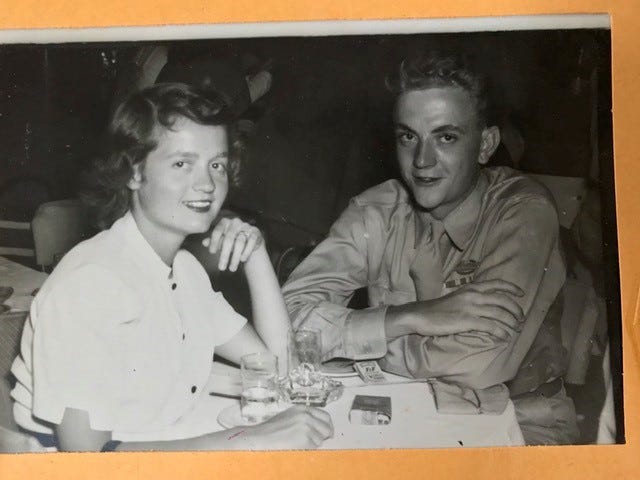
These love letters are the most delightful things I have seen in a while. Young Kurt Vonnegut is silly – he fills his letters with tiny drawings and circles with notes next to them that say “I kissed it. Kiss it, detach and return.” He insists on calling Jane “Woof” or “Woofie” or sometimes other silly names like “Stinky”. He’s delightfully funny and clever, and extremely horny (their relationship was long distance at this time, hence the need to write so much). Here’s one of my favorite passages, found in the post script of a letter from his Sophomore year in college from 1941: “Sorry, can’t afford lingerie. You’ll just have to go naked for the first few years. That’s the way it’ll have to be darling. I don’t like the idea any more than you do, but we’ll have a few lean years, and we won’t always be lean.”
Mostly, he’s just madly in love, and you can tell. Listen to this shit. “Dearest Woof: Remember our friends Yin and Yan? A pleasing little circle made up of a pair of droplets, Chinese symbols of man and woman, life. Look, where Yan is more narrow Yin is her fullest; and where Yin is weak Yan is his strongest. You see, darling, they fit neatly into the pattern like a jig-saw puzzle, not like bricks. I swear before the maker of sycamores and little fishes that I adore you for being the heavenly cluster of ideas and woman you are. I would do anything on God’s charred acre to make you happy. It may be poor technique, but I’m the truest bum you’ve ever come across.”
When I realized a couple of hours had passed and I was still reading, I came up for air. I felt…intoxicated. I felt like I was in love. Now, I am very much in love with Joshua in real life, but this type of “in love” was different – a fictitious kind of love where I was a 19 year old woman, in college, corresponding with this dashing man who was silly, offensive, passionate, aloof, lazy, beyond intelligent, and absolutely madly in love with me. I felt beautiful and joyful when he was showering praise upon me. I felt worried and slighted when he was cross with me, or talking about dating other girls. I felt hopeful and excited when he talked about the dreams he had for the future. I felt annoyed that he kept calling me “Woofie”. I guess what I’m saying is that I had a mini love affair with Kurt Vonnegut for 2 hours on a Sunday afternoon, and I don’t regret it. It was a short affair with words on a page. That young Mr. Vonnegut certainly had a way with words. Yes, I can hear you all shouting the completely justified “DUH”.
How does the written word do this to me? I am so often in awe of the authors I’ve encountered who can flick their pen and take me to another place and time, and make me feel love and joy and pain and fear. How did Jane Austen create a world of characters who are all flawed and relatable, and write about their lives so convincingly that I feel like Elizabeth Bennet is a close, true friend? How does Harper Lee make me feel like a child again every summer? How did Margaret Mitchell conceive of Scarlett O’Hara, and make me despise and respect her at the same time? How did Roxane Gay make me weep and teach me what it’s like to walk around inside of her body and carry her weight? How did Michelle McNamara write a book about the Golden State Killer that gives me nightmares no matter how many times I read it? How did love letters that Kurt Vonnegut wrote for someone else make me feel loved just the same? The written word is so powerful.
Whenever someone gives me a little too much credit and tells me that I have “a way with words”, especially when referring to my writing, I swell with pride and delight. If one sentence or phrase, or single word I’ve written in a paper or dissertation, in a letter or email, in a birthday card, or even a post on social media has been powerful enough to make someone feel…anything constructive at all (joy, love, understanding, compassion, thoughtfulness, disagreement, etc.) then it was a word worth writing. Maybe Kathleen Kelly (deep cut from my favorite Norah Ephron movie) was right, and “you are what you read”. To you who have made me feel all the things with YOUR words – I thank you.
Famished
October 3, 2021
“You’re so fat, I could take a swim in your belly button.”
This is what one of my high school crushes leaned over and whispered to me in the front row of the gym/auditorium during an assembly during sophomore year. I don’t recall how I reacted – I imagine I did what most high school girls would do in my position and called him an idiot and playfully shoved him out of my face. No big deal, I’m a cool girl, and your fat jokes are hilarious! Yet here I am, 15 years later, and I still think about it. At the very core, it’s just a memory of a boy who grew up to be a really nice man and dad, who probably doesn’t remember it at all. For me though, it is the first memory I have of really feeling bad about my body. In fact, it was an ‘enlightening’ of sorts – it was like all the puzzle pieces of the mystery for my unhappiness (my unpopularity with the opposite sex, the tendency for the other girls to leave me out or conspire to dislike me) all came together. Aha! It all makes sense now, I’m fat! A few days later, the coach of my volleyball team mandated that all of the girls on the team had to wear the spandex uniform shorts instead of the looser-fitting shorts I preferred, and my angsty teen heart thought it might break. Thus began the most complicated relationship I will ever experience – the relationship between me and my body.
This is a difficult topic for me, because my thoughts on it tend to be so scattered. It’s actually quite frustrating. I’ve spent so many hours of reflection and dissection of my eating, my body, my body image, how I feel about other bodies, etc. – alone, with a therapist, with my close friends, with Maudie- yet it’s still so hard to think clearly about it. I’m going to do my best here to articulate what’s been going on in this heart and head of mine for so many years, but honestly, if I were capable of thinking perfectly clearly about the topic at hand, there would be no need to write this post.
First off, I am not a fat person. I recently devoured a book called “What We Don’t Talk About When We Talk About Fat” by Aubrey Gordon. Aubrey is a fat-activist, who is a co-host of a podcast about the wellness industry that I love called Maintenance Phase, and she is a self-described fat-person. A big part of her philosophy about fat is that it’s not a bad word or a pejorative (or at least it shouldn’t be used that way). Fat, she says, is a description – just as I could describe myself as short with brown hair and green eyes, she describes herself as fat. Now, it’s unclear what the threshold is for being able to call yourself fat, but I don’t think I am close to that threshold – I believe Aubrey would describe me as a ‘thin’ person.
I follow several people like Aubrey on social media, and I’m a connoisseur of books written by fat women. Ladies like Roxane Gay, Lindy West, Whitney Way Thore (the star of one of my favorite reality shows, My Big Fat Fabulous Life), Jes Baker, and many others have filled my Audible library and they all have remarkably different perspectives on fat. Aubrey’s book is unique in that she writes mostly about fat people in society – how societal changes can make fat people more comfortable in the world and how to battle anti-fat bias. In this wellness and body image genre, most books are more focused on individual physical and emotional reactions to body size. Many books about fat people are ‘fat to fit’ stories of triumph over the herculean task of weight loss – people who have lost substantial amounts of weight and have managed to keep it off. In “It was Me All Along“, Andie Mitchell discusses how losing half of her body weight changed her life and helped her on her journey to self-acceptance. Many other books in the genre are not like that at all. Many are about body positivity – Whitney Way Thore’s book, “I Do It with the Lights On” is a celebration of how Whitney figured out how to love her body at any size and found remarkable confidence. She does weight lifting competitions, she goes on adventures, she dates, and believes that her size doesn’t stop her from living the life she wants to live. Jes Baker and Lindy West have similar mantras about how being fat and being bad-ass babes are not mutually exclusive. And then you have the books that are full of stories that are anything but celebratory or triumphant. Roxane Gay, who describes herself as super-morbidly obese, wrote a book called “Hunger“, which was one of the most honest and painful memoirs I have ever read. In her book, Roxane details the hardships of her size and the dieting and disordered eating that have plagued her entire life. She doesn’t celebrate any type of weight loss success she has had, or make any inspirational claims about how we should all love ourselves the way we are – she simply writes the truth about her experience. It’s an excellent book.
As a thin person, there are so many things in these books that I simply can’t relate to. I have never been worried about getting on a plane because of anxiety over seat belt extenders, or needing to buy two tickets for myself, or dealing with other passengers and how they react to having a fat person encroach on their personal space. I can ride any roller coaster (as long as I’m tall enough). I can walk my dog as far as she wants to walk. I can go to the gym without feeling insecure or watched by people around me. I can go to the doctor and usually walk out without a lecture on my weight or BMI. I can find clothes that fit me in almost any store. I don’t pretend to know what it’s like to move around this world as a fat person, and whatever juvenile ridicule I’ve experienced, such as the incident described in the first paragraph above, it can’t really compare to what others experience.
There are things that I can relate to though – most pertaining to body image, disordered eating, and a life dominated by diets and exercise. I know what it’s like to eat a donut for breakfast and fixate on that donut all day. I know what it’s like to look in the mirror and see a disgusting body, and tell myself it’s a disgusting body, and feel shame (see my previous post for more on shame) for making the choices that lead to that body. I know what it’s like to buy a new dress and leave it in the closet for the day when I’ve finally lost enough weight to wear it – as if wearing a pretty dress is a reward reserved only for beautiful, worthy bodies. I know what it’s like to throw up food after meals – food that I cooked, and bought with money earned through hard work. I know what it’s like to think that the keto diet or the Whole30 diet, or the insert diet name here diet is the key to finally changing myself and finding happiness. I know what it’s like to put on size 2 pants and see the bewilderment on my boyfriend’s face when I say things like “I need to take my fat ass to the gym” or “Do you think I’ve been getting fat lately?” I know what it’s like to starve myself here in the land of milk and honey, where food and the joy that surrounds it are abundant. All of these things defy all logic. You can imagine how maddening it is to defy logic when you’re a PhD statistician. Maddening.
It’s also maddening and frustrating to be my size and to even for a second compare my life to the ladies in the books I mentioned above. I have a lot of problems with it. I feel so silly calling myself ‘fat’ when I know nothing of what it’s like to be a fat person in our society. I can read about it and empathize, but I can’t truly comprehend it without experiencing it myself. I also find myself wondering how people like Whitney Thore and others have found so much peace with their bodies- why is it that they can accept themselves even when society as a whole does not, yet I, who face no stigma at all, cannot? Even when bombarded with bias and criticism and stigma, they can still stop the negative self talk and the criticism from within. That’s remarkable. I have so much respect for people who love themselves unconditionally.
The last couple of years have been a system-reset of sorts for me on the topic of body image and weight. Once I decided to stop hiding in the comfortable discomfort of dealing with pain alone, I got some help. I speak with a friend regularly who also struggles with disordered eating on this very topic. Every time we meet, I’m met the same feeling I’m having now as I try to write this – feeling like I am not articulate and my thoughts are disorganized and jumbled. One of the things I tried to communicate with with her from the very beginning is how the way I felt about myself in the past (and honestly, still do sometimes) is 1) a moral affront to myself and 2) also a moral affront to others. What I mean by the latter is this: if I can express so much hatred and disdain toward myself based on my body or outward appearance in general, how does that map onto how I think about other people- especially people like the authors mentioned in this post? I have so much respect for these women and their words mean so much to me – do I secretly hate them? She assigned me a really neat exercise that helped me flip that idea on it’s head- she asked me to make a conscious effort to really look at the people around me and find things about them that are lovely. The goal was to help me convince myself that I really DO see beauty and value in other people regardless of physical imperfections. Then I can start mapping THAT attitude onto the way I see myself.
We’ve been working really hard, even though we’ve dialed back our visits recently. It remains difficult to break this down in well-crafted, blog-friendly prose, but my friend is always encouraging me to continue reading and exploring the experiences of others to help further my journey to clarity. I mentioned in the intro for this blog page that I feel truly content in my life. This is a fairly new development for me that didn’t really begin to manifest until the pandemic started and I started to work on being kinder to me and accepting the body that I had abused and starved in the past. My struggles in this area are a shadow of what they were a couple of years ago. I don’t always cut myself enough slack and I can still catch myself in cycles of negative self talk, but I also know some constructive ways to break those cycles. Most importantly, I eat. I eat a lot, and I usually eat without the guilt and shame that used to linger after meals. I’ve found a ‘diet’ that is fairly balanced – I eat a shit ton of salads, but also a lot of soft pretzels. I am no longer famished.
Reader, I am so glad you are here. Thank you for hanging with me this far and thank you for…I dunno, just being you. If you are struggling with something similar to what I’ve described here (hell, even if you’re struggling with something completely different), I encourage you to get help and believe that it can help. And reach out to me if you need a friend.
The Princess Lied: Some Thoughts on Shame
October 1, 2021
Did you know that Princess Diana was once so jaded by love that she made anonymous, nuisance phone calls to the household of the lover who scorned her (and his wife!)? She would call from a phone booth in the middle of the night, and the poor soul who answered the phone would hear only the sound of breathing or the click of the telephone receiver. The annoyed couple on the receiving end of the calls asked the police to investigate the mystery calls only to be informed that they were coming from Buckingham Palace, Princess Diana’s mobile phone and several phone booths near her private apartment. Of course, as is the case for most scandals, especially those involving pretty princesses, the media quickly caught wind of the alleged phone calls and ran with the story. Diana was so embarrassed by the accusations, and I suspect ashamed of her actions that she did what I think most of us would do in her shoes- she lied through her teeth and said she didn’t know how to use a pay phone. She was about my age at the time.
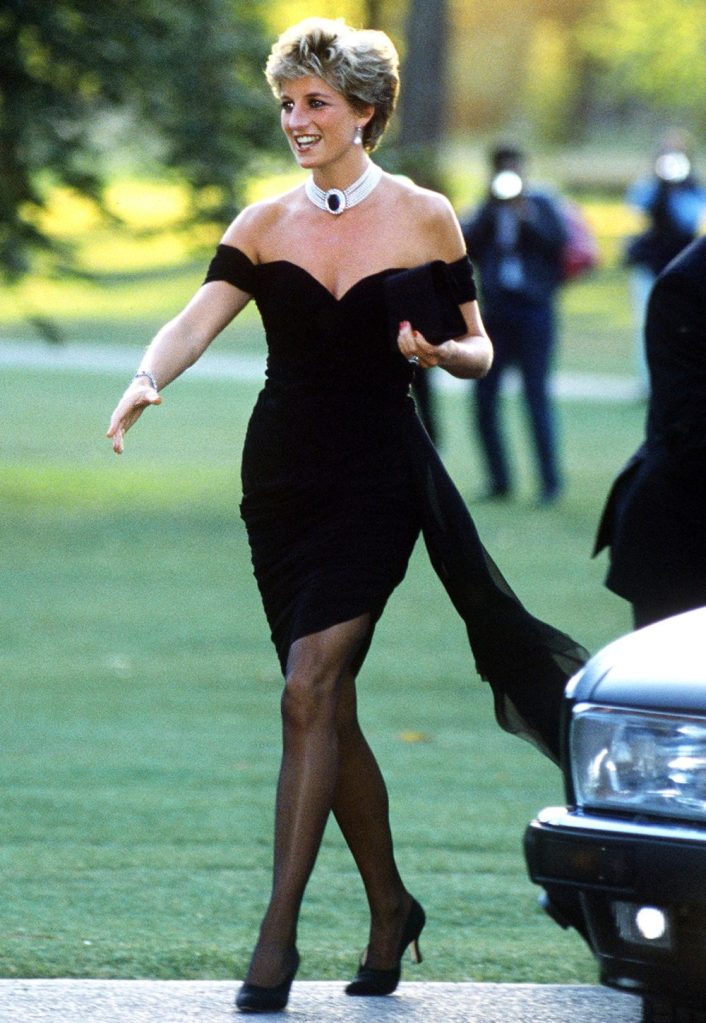
I was shocked when I learned about this little tidbit – partly because I couldn’t believe Diana had a mobile phone in 1994, and also because I have an image of Princess Diana in my head that is so much more…dignified than than a woman who prank calls her ex because she can’t get over him. Don’t get me wrong, I know Diana and Charles both did a lot of things that are morally questionable – cheating on each other, tattling on each other in the press, simply being unkind. Princess Diana pushed her step-mom down the stairs one time AND confessed to doing so, for Pete’s sake! But something about these shameful phone calls stuck in my head so much more than the other things I know about Princess Diana (to be clear, not more than all of the perfectly lovely things she is remembered for – including philanthropy, humanitarian efforts and being a kick-ass mom). I think this story sticks in my head because shame and the sting of this combination of embarrassment and remorse is an experience we can all identify with. I don’t know what it feels like to cheat on someone, or be filled with enough anger to push an old lady down the stairs – but I’ve felt that pure, red-hot lava that is shame flow through my veins more times than I can count.
I keep thinking about what the word ‘shame’ means to me. I’ll do my best to offer my own succinct definition (from Beck-ster’s Dictionary, ha ha?). Shame: the type of humiliation or distress one feels when conscious of one’s own foolish or ‘wrong’ behavior; behavior that one typically regrets and feels remorse for displaying. Words such as embarrassment are often used interchangeably with shame, but I think there is a difference. I felt embarrassed when I bled through my pants in middle school and all the other girls in the hallway laughed at me. I felt shame when I asked a boy to the high school prom in front of his friends and he told me to take someone else as his friends smirked in the background. Both of these events were humiliating and I was subject to ridicule from others in both instances, but something about the fact that the prom fiasco was the direct result of a choice that I made – a choice that seemed like a foolish blunder at the time – forced me to ride the roller coaster of emotion with big hills at humiliation and heartbreak, and a final, sudden stop at red-hot shame.
Consent is an important part of shame – in order to consent to it, you have to believe that something you’ve done is unjust or foolish. When asked about pushing her stepmother down the stairs, Princess Diana allegedly said “I pushed her down the stairs, which gave me enormous satisfaction.” Like, damn! That’s not a remark from a woman who felt any shame at all – and my best guess would be that Diana felt that the act was completely justified and had no problem letting the whole world know what she had done. But in the case of the silly phone stalking, she was so ashamed that she lied to the press and tried to manipulate the press cycle to keep the story quiet. The two princess stories juxtaposed show us the main idea I have taken away from a short study on shame – Diana’s consent to shame was not determined by the morality of her actions. I think if we had to decide whether pushing a woman down the stairs or making some phone calls was the more morally sound choice, we would all choose the phone calls. As ominous and creepy as anonymous phone calls can be, they are much less likely to cause harm than a flight down an expensive-ass staircase. Yet, Diana expressed no shame over the physical confrontation – simply because she didn’t consent to feeling it. I don’t condone the action of shoving family members down staircase, but I do kind of admire the stubborn refusal to feel shame for what she felt was righteous and just.
Shame is a natural response to this thing called life. We feel shame when we don’t treat people the way we should – the things I say when I’m hangry come to mind. We feel shame when we do foolish things that aren’t necessarily done out of malice, but rather result from oversight or not being careful enough. I cried tears of intense shame in my car last weekend after I came way too close to hitting a pedestrian in a crosswalk – I just didn’t see him. The pedestrian called me a bitch and I didn’t disagree with him. Overall, shame is probably a healthy emotion. It was good for me to feel the weight of the fact that I almost called a horrible accident with the pedestrian last weekend. It’s good for me to feel shame over my type-o’s in emails to wide audiences at work so I’ll slow down and proof read next time. It’s good that I feel shame for allowing myself to be mistreated by friends or in relationships – it means I know my worth and recognize how foolish it is to accept less than I deserve. It’s a good thing, just as long as the overthinkers among us (a certain blogger who shall remain nameless, for example) don’t allow healthy doses of shame to spiral into sessions of negative self-talk. Most importantly, I think the secret to making sure shame doesn’t consume me is to remember that my definition of shame requires consent.
There are people among us who thrive off of making us feel shame. They enter your headspace when you least expect it. The media does it. When the Gabby Petito missing person case (now a homicide investigation) was in its infancy, the media put it in our faces all the time, at the top of headlines, in hourly updates on cable news. Eventually many crime junkies got hooked. A few days later, the media was demanding to know why we care so much more about Gabby Petito than all of the other missing people in the world. I think my first reaction to that was ‘shit, you’re right! I really do care about all people, regardless of race, gender or face symmetry, so why aren’t I behaving that way??’ Here’s the truth though. The media monster that was pushing this shame on me is the same media that fed me the Gabby Petito case in lieu of all of the other missing person stories – they are the ones who made me care. Am I really going to consent to feeling shame about “not caring” about missing people that I didn’t even know about?
Your friends will do it too. We all know we are being judged silently for the things we post on Facebook and Instagram, but sometimes our friends do it ‘out loud’. They will see one picture of you or one location tag and decide that this evidence is somehow a clue about your true character or what you believe. Before you know it, they are writing you messages or calling you to let you know that you should be ashamed, without having the full story or understanding the truth that is in your heart. I’m not saying that we can’t learn from our friends – my best friend, Kristin has pointed my own missteps out to me more times than I can count, and I’m thankful for her honesty and willingness to help me learn. But her intentions are never grounded in shame.
I am a firm believer in feeling remorse when I do the wrong thing. I apologize a lot. I reflect on myself and the things I say and do, and when those things don’t live up to the standards I have for myself, I do my very best to correct and apologize when correction can’t be made. I’m sure most of you are like this as well. Make sure you know the difference between feeling shame in the natural, healthy way we are designed to feel it, and feeling it just for the sake of shame. Make sure you aren’t feeling it just because someone else told you to feel it – because your shame might make someone else feel better about themselves, or might propagate someone’s agenda. I guess all this is to say: be careful when you consent to shame.
If you want to learn more about Princess Diana and/or listen to a great podcast about reexamining the way we remember the past, check out ‘You’re Wrong About’ here: https://yourewrongabout.com/
Can I be Cappy Alone?
September 29, 2021
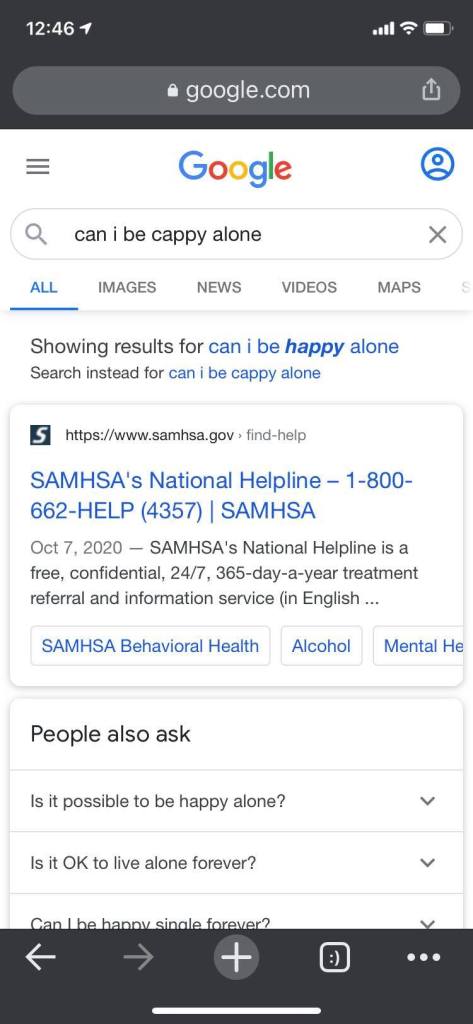
This is what I typed into the Google search bar on a crisp fall day in 2020. Immediately, the Google autocorrect assumed that I was asking the entire internet the existential question we have all asked ourselves at least once – can I be happy alone? Immediately, Google showed me suicide helplines I could call in case I was thinking about doing the unthinkable. But in reality, the search was brought about by a video game. You see, I wanted to play Super Mario Odyssey on my adorable Nintendo switch – the one with the neon pink and green controllers I was so proud of when I bought them. Most peculiarly though, I did not want to play the game as the hero – our favorite short plumber, rescuer of pretty princesses in pink, bopper of Goombas and defeater of Bowser – Mario, himself. I wanted to play as the sidekick in the game – the whimsical, spinning cap that Mario tosses to give him leverage over the enemy. I would like to say that Cappy is to Mario as Robin is to Batman, but that may be giving the cute headpiece with eyeballs too much credit. A more relevant analogy would be: Cappy is to Mario as the webs that come out of Spiderman’s hands are to Spiderman. He’s a fashion accessory that doubles as an accessory to murder of Goombas, Piranha Plants, and bunnies alike. He is what most gamers refer to as “Player 2”. Very quickly after Google realized I was more silly than suicidal, all of the internet informed me of one simple fact: There can’t be a Player 2 without a Player 1.
Side note: Check out this cute video about Mario Odyssey from my favorite YouTube Duo - Girlfriend Reviews.
I started playing video games during the worst year of my life (so far): 2019. That year found me in an emotionally abusive fake-relationship with a cheating, alcoholic, narcissist who made me cry all the time. But honestly, when I ignored all of qualifiers in the previous sentence, we had a lot of fun. We drank, we went to hockey games, we drank, we went to the pool, we drank, and we played video games while we drank. During this time, I realized that the video game world – the world that had complicated the real-relationship I had been in previously – the filthy, lazy habit that I had always judged as a waste of time and money – was a shit ton of fun! I won’t bore you with the details of the end of my fake- relationship, but one positive thing I took away from that experience was a Nintendo Switch (and all the accessories! And an X-box! And a PS4! And all the accessories for those! Look, I don’t half-ass things).
Enter 2020. Like the rest of you, my world practically stopped turning in March of 2020. I found myself single, living in a studio apartment, skinny as a rail in the throes of disordered eating (not to worry, therapy is a wonderful thing), and suddenly, unable to leave my apartment to even go to work. My office was in my bedroom, my bedroom was in my living room, my living room was in my kitchen, and my dog was in my face. 24 hours a day, 7 days a week. Most of my friends on social media that have families – husbands, wives, and children – suddenly found themselves trapped in their own homes with people they loved, like an overdose of the greatest drug. Children losing their freaking minds, unable to see their friends or burn enough energy, husbands and wives sharing office space and living without bro/girls nights or any escape from their adorable, sweet, nerve-wracking families. I get it, and I want you to know I sympathize. But I was trapped in another type of environment – I was alone, trapped in my own mind, inside of my small apartment with a dog that never speaks but still manages to sass me relentlessly.
When I wasn’t writing python code for work or running – I played video games. 2020 was the year I finished my first video game in full. I played Fire Emblem: Three Houses from start to finish, and experienced the heartache that comes with finding a nice, blonde JRPG boyfriend named Dimitri, only for him to return in the second-half of the game as a blood-thirsty, vengeful madman with an eye-patch (I ended up marrying that guy in the game and I think the developers deserve an award for most realistic gameplay). My character in that game was a green-haired lady named Rory, who was a level 98 killing machine. I went on to catch all kinds of Pokemon, experienced the time-suck that is Animal Crossing, the cuteness that is Stardew Valley, relived my angsty teen years by playing the Sims 4 on Xbox, caught up with my good friend in the Navy while he taught me to play Halo all the way from 29 Palms in California, and celebrated like an idiot when I conquered a game that I am certain was created for 4-year-olds- Yoshi’s Crafted World. Oh, and I delighted over Shantae the Half-Genie Hero, who shakes her hips and turns into animals (and inspired me to try to dye my hair purple during the shut down).

Now, returning to my Mario Odyssey woes – why was I so hell-bent on playing as Cappy instead of hero Mario? The obvious answer is that it’s funny, because it’s a big hat with eyeballs that doubles as an assassin for a man in overalls.
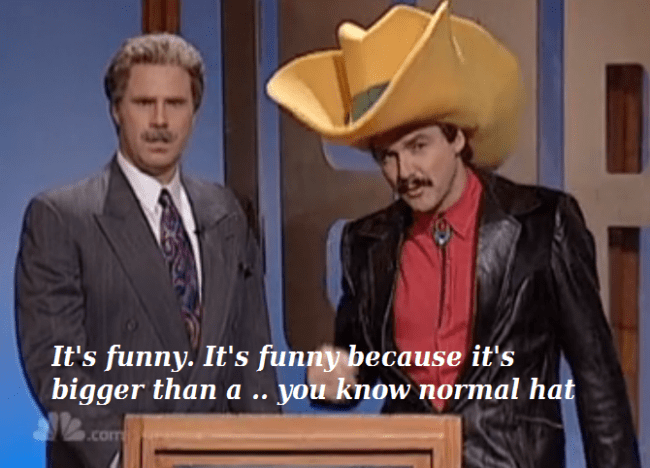
Sometimes it’s just really nice to be Player 2. It’s nice to be a secondary character. Player 1 gets to call all the shots and be the star, while Player 2 is a helper. Player 2 can sip on a Corona, while Player 1 figures out how to beat the level. And most importantly, being Player 2 means you are by default, not playing alone (as my Google search taught us). You’re part of a team, but not the leader. When I think about it, 2020 was a really great year to want to be Player 2. I am definitely Player 1 in my life and my household – Maudie doesn’t pay her rent, and rarely chips in for groceries unless it’s hotdog night. I am the leader of my household, the caller of the shots, primary decorator, chef, trash remover, handyman, cleaning lady, bread-winner, appointment maker, dog walker and poop scooper. At work, it’s a similar story. I lead my team, I made the final calls, I am the technical expert, I control the client relationship. Being in charge is great. Leaders are empowered, have the ability to empower others, get to deliver good news and plan celebrations, get to watch their teams grow and improve. And being in charge at home means I always eat what I want, I’m surrounded by my favorite colors in my home, and I never have to answer to anyone else for financial decisions. It’s awesome. Being Player 1 can be awesome.
Independence in general is awesome. I have to be honest though. Sometimes it would be nice to have a break. Petty conveniences aside- you know, coming home from a long day of work to have a meal ready for you, or to find that the dog has already been walked, or that the laundry has been folded – sometimes it would be really useful to have someone to help with the big decisions in life. I recently bought a house – and I am so proud of myself for going through that process all by myself and choosing my house, my offer, my furnishings – everything all by myself. There was also a lot of anxiety that came with that – not knowing if I should trust my own instincts, not having another stakeholder to offer up pros/cons/preferences. I know now that I’m living in my dream home and LOVE it, but at the time, I felt very lonely in the process. At the beginning of 2020 – as much as I joked about the situation and tried to make the best of my isolation, I really did experience a lot of fear. All of the what-if’s were hard to handle on my own. What if there is a recession and I lose my job? What if I get sick and can’t get help? What if someone in my family gets sick and I can’t be there? What if? Where is my Cappy to help me boop these Goombas?! Better yet – can I be Cappy and let Mario deal with this shit?!
I guess the big difference between my video game life and my real life is that I’m laughably bad at video games. When I finally gave up on being a Cappy sidekick to a computer-driven Mario in Mario Odyssey, I played the game as Mario. As much fun as that game is, I gave up within the first hour because I got frustrated with losing all of my coins. I’m just bad at it. I can never remember which buttons do what, I have a lack of hand-eye coordination. My only real asset is enthusiasm. I was so much better at being Player 2. The last few years of my non-video game life have been hard (I know they’ve been hard for you too, dear reader) but all the difficulties have allowed me to keep leveling up over and over again. As challenging as it is to be independent, and despite all the anxiety and self-doubt that comes with it, I have learned that I’m skilled enough to be Player 1. I’m Mario.
Follow My Blog
Get new content delivered directly to your inbox.
 Cluelessness is the Mother of Invention